From Data Over-Abundance to Execution Clarity
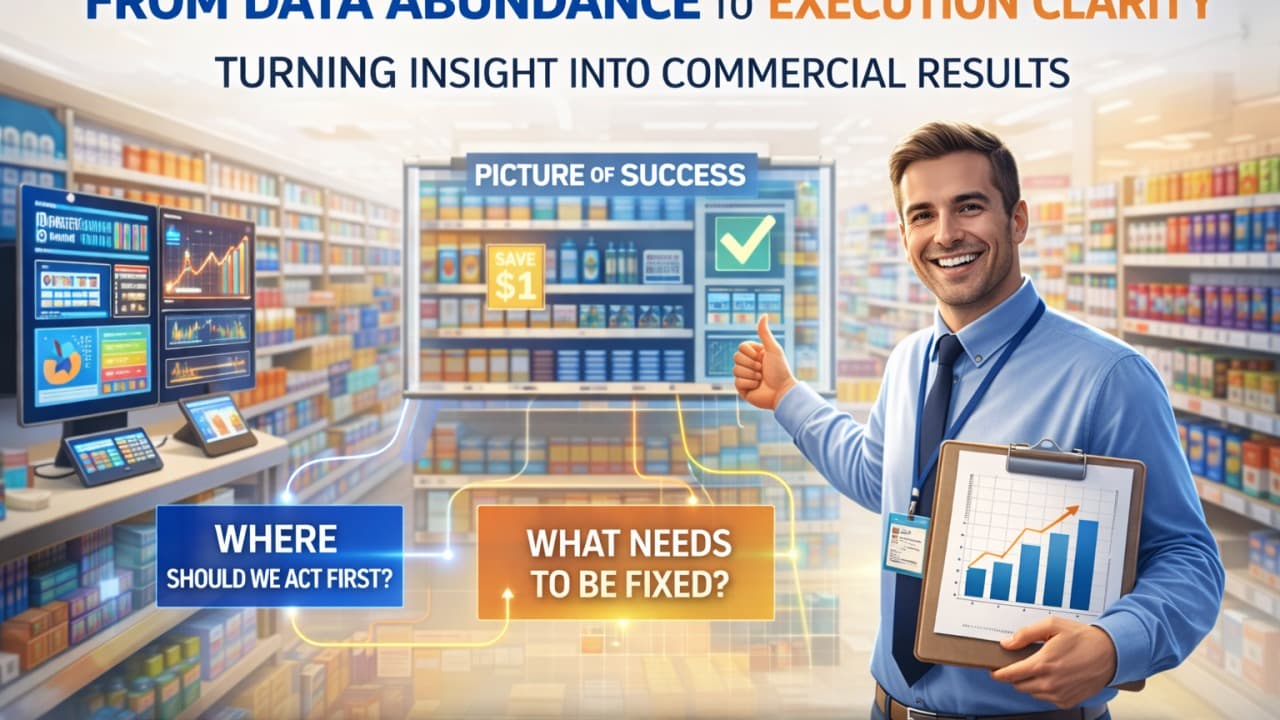
"We have more data than ever... so why is execution still failing in the store?"
If you've ever worked in sales, trade marketing, or shopper insights, you've probably felt this frustration at some point in your career. Companies invest heavily in dashboards, reports arrive every morning, KPIs multiply, and analytics tools promise sharper insights than ever before. Everything seems to point in the right direction. Yet, when you walk into a store, the reality can feel surprisingly disconnected from all that intelligence. The display is missing, the promotion hasn't been activated, and a key SKU is nowhere to be found on the shelf.
At some point, an uncomfortable question inevitably comes up: how can we know so much and still struggle so much with execution?
The Real Issue: Clarity, Not Data
After many years working alongside commercial and field teams, I've come to believe that the problem is rarely the lack of data. In fact, most organizations already have more information than they can realistically act upon. The real issue tends to be something much simpler—and much harder to achieve: clarity & simplicity.
In theory, data should make execution easier. In practice, the opposite often happens. Headquarters adds more KPIs, marketing wants visibility metrics, trade marketing introduces compliance indicators, and sales adds store coverage dashboards. Each initiative makes perfect sense on its own. But when all of this reaches the field, the message becomes overwhelming. Teams are expected to monitor everything at once, and when everything becomes important, priorities start to blur.
Field Team Overload
Field teams end up checking boxes instead of focusing on what truly drives impact, and managers spend more time reviewing reports than solving the real issues in the store. Little by little, execution—the very thing that actually grows the business—gets diluted.
What Great Organizations Do Differently
The organizations that consistently execute well tend to approach this challenge differently. Instead of trying to control every possible variable, they invest time in defining a clear picture of success. What does a great store actually look like? Not in a forty-page manual or a complex spreadsheet, but in something simple and visual enough that anyone in the field can recognize it immediately. When a sales representative walks into a store, the answer should be obvious: this is what good execution looks like.
Once that picture becomes clear, something powerful happens. Teams stop guessing, internal debates about priorities decrease, and execution becomes more focused. Data still plays an important role, but its purpose changes. Instead of generating more reports, it helps answer a few very practical questions: where should we act first, what exactly needs fixing, and if we fix it, will it truly move the business?
When data is used this way, teams stop analyzing the past and start driving action in the present.
Over the years, I've seen this shift happen in very different organizations. Some were large multinational companies with sophisticated analytics platforms, while others were much smaller businesses trying to bring more discipline into their commercial operations. Interestingly, the turning point was rarely another dashboard or another layer of analytics. More often, it came from simplifying the execution story and aligning everyone around a short list of priorities that truly mattered at the shelf.
Once that clarity was in place, performance improvements followed surprisingly quickly.
My Personal Takeaways
After seeing this pattern repeat itself again and again, my advice is simple: don't be afraid to simplify. If you feel overwhelmed by dashboards, reports, and endless KPIs, try something bold—put most of them aside for a moment and focus on clarity. Ask yourself and your team a very simple question: what really needs to happen in the store for us to win? Then make that your priority for the next few weeks. It's amazing how quickly execution improves once everyone knows exactly what matters.
And if you're working in a smaller company, don't assume this only works for large organizations. In my experience, simplicity works everywhere—for small teams and for global companies alike. If you feel that gap between having a lot of information and knowing what truly matters in execution, you're not alone. I'd genuinely enjoy hearing your perspective.
Want to bring execution clarity to your retail operations? Book a demo to see how Marketrack can help.